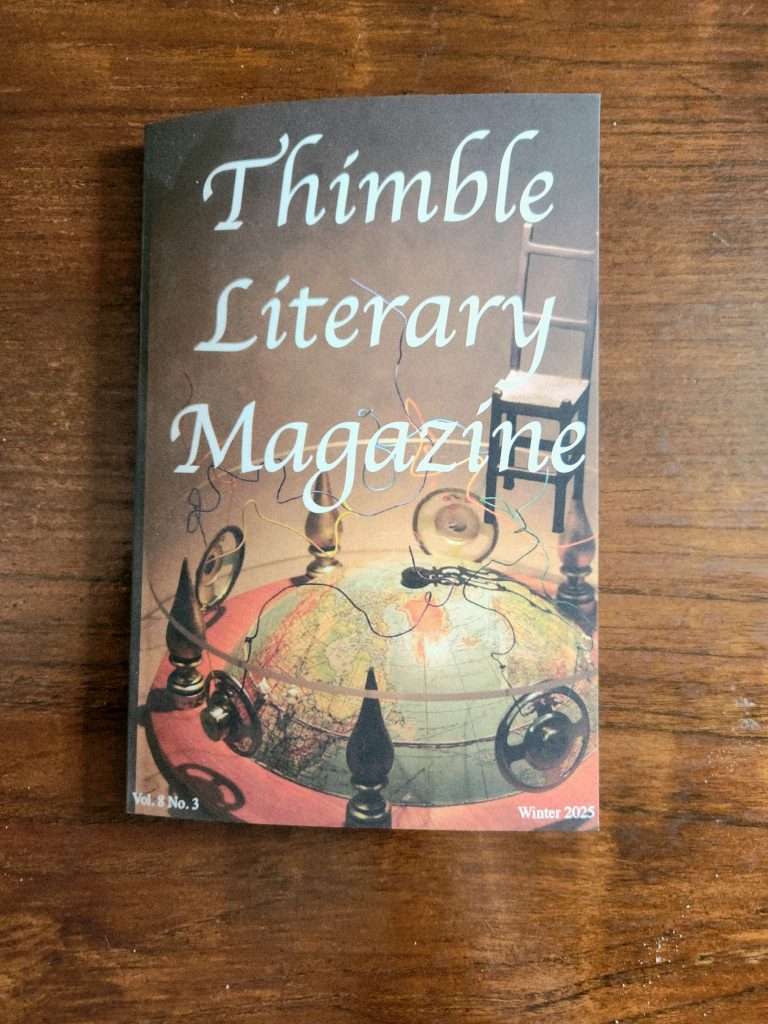
My reading list for the first half of the year (in alphabetical order):
Best American Short Stories, 2025 (ed. Celeste Ng)
Birds of America by Lorrie Moore
The Book of I by David Greig
Canticle by Janet Rich Edwards
The Consequences by Manual Muñoz
The Dark Dark by Samantha Hunt
Gilead by Marilynne Robinson
A Girl Returned by Donatella Di Peitrantonio
Girl, Woman, Other by Bernardine Evaristo
The Great Believers by Rebecca Makkai
The House on Mango Street by Sandra Cisneros
Jesus’ Son by Denis Johnson
The Loneliness of Sonia and Sunny by Kiran Desai
Lost Children Archive by Valeria Luiselli
Matrix by Lauren Groff
A Parchment of Leaves by Silas House
The Prettiest Star by Carter Sickels
We Run the Tides by Vandela Vida
The Social Graces by Renee Rosen
Stone Yard Devotional by Charlotte Wood
An overarching theme for my last five months in reading is the examination of community & insider/outsider:
The protagonist in Canticle by Janet Rich Edwards becomes a Franciscan friar and lives with the beguines in 13th century Brugge.
A Girl Returned by Donatella Di Peitrantonio follows a girl who learns that the people she thought were her parents are not her parents when she must return to her biological family.
In The Prettiest Star by Carter Sickels, Brian returns to his hometown in Ohio to die from AIDS-related illness, and he’s met with homophobia and fear from the community.
The protagonist of A Parchment of Leaves by Silas House says the only fault of her husband is that he’d choose his family over her. Naturally, the novel complicates her conclusion.
In Matrix by Lauren Groff, which I wrote about here on Substack, Marie de France is kicked out of the court of Eleanor of Aquitaine and sent to live out her days as the prioress of a struggling English abbey that she turns into a thriving, secure community.
I’m honestly not surprised by the desire in myself (and other readers) to experience cloistered societies like those found in Stone Yard Devotional by Charlotte Wood and in The Book of I by David Greig (although definitely without the need to hide for one’s life from Viking invaders). After all, the world is large and happenings are turbulent. I must acknowledge that the desire for a safe community (even within myself) can sometimes be a double-edged sword: security on the one hand and intolerance on the other.
Now, a moment on writing craft.
I’m learning a lot about orientation and clarity. That is, technically making sure the reader knows what’s going on.
For example, in A Parchment of Leaves, Silas House orients the reader by starting the narrative in close third person. This choice allows the reader to see the main character Vine from an outside perspective before the narrative switches to first person from her point of view for the majority of the narrative.
In the third person, we learn how people of the area believe that Vine has killed or harmed men coming up onto the mountain where her family lives by invoking curses on them. Then we get this juicy tidbit:
She had a perfectly good motive, anyway. Tate Masters was the richest man in the nearby town of Black Banks, and he owned all of the land in the head of Redbud Camp. He had decided to build himself a mansion on the mountain’s crest. Masters had made it well known that his plan was to run the Cherokees off. (4)
House orients the reader by coming out and just saying what’s happening, very effectively. Whoever is telling us the story, that person thinks Vine is well within her rights to use a little magic to get rid of these intruders. Vine and her family are resilient. We’ll use this information when Vine takes over the telling of the story.
What I’m working on.
I was working on a novel at the start of the year, but I decided to switch my focus to short stories to work on the craft of writing, which can be easier to see and handle in a shorter space.